Forget The Mouse Trap, What About A Mouse Spa? What Every Marketer Needs Today
Consumer GoodsFinancial ServicesInsuranceTelecomsRetailQSRUtilitiesConsumer TechArticle
August 23, 2026
By Alex Javer, Chief Strategy Officer – TLC Worldwide
Ask any marketer looking to dial up consumer value, if they want and could sustain a better benefits program and the answer is usually some version of the same thing - “we’d love that, but we’d never be able to pay for the thing if it was any good!”.
It’s a reasonable reaction, considering just how expensive discounts are to brands - the often misplaced proxy for increasing the customer value exchange - and the limited list of proven alternatives. In effect, in a world where marketing budgets are under more scrutiny than ever, 59% of CMOs in 2025 reported having insufficient budget to execute their plans, according to Gartner.
To even contemplate year-round discounting carries well-understood risks - eroding margins, diluting brand equity, and making shoppers loyal to discounts instead the products and services designed to woo them in the first place! So, perhaps the caution around offering consumer benefits is also a rational response to having watched generic discounting go so very wrong.
Many brands have successfully built ancillary customer benefits, but these almost universally exist as a quid pro quo for paid membership or spend-related tier qualification – i.e. not increasing the value exchange universally for all, just the lucky few who are essentially buying the benefits.
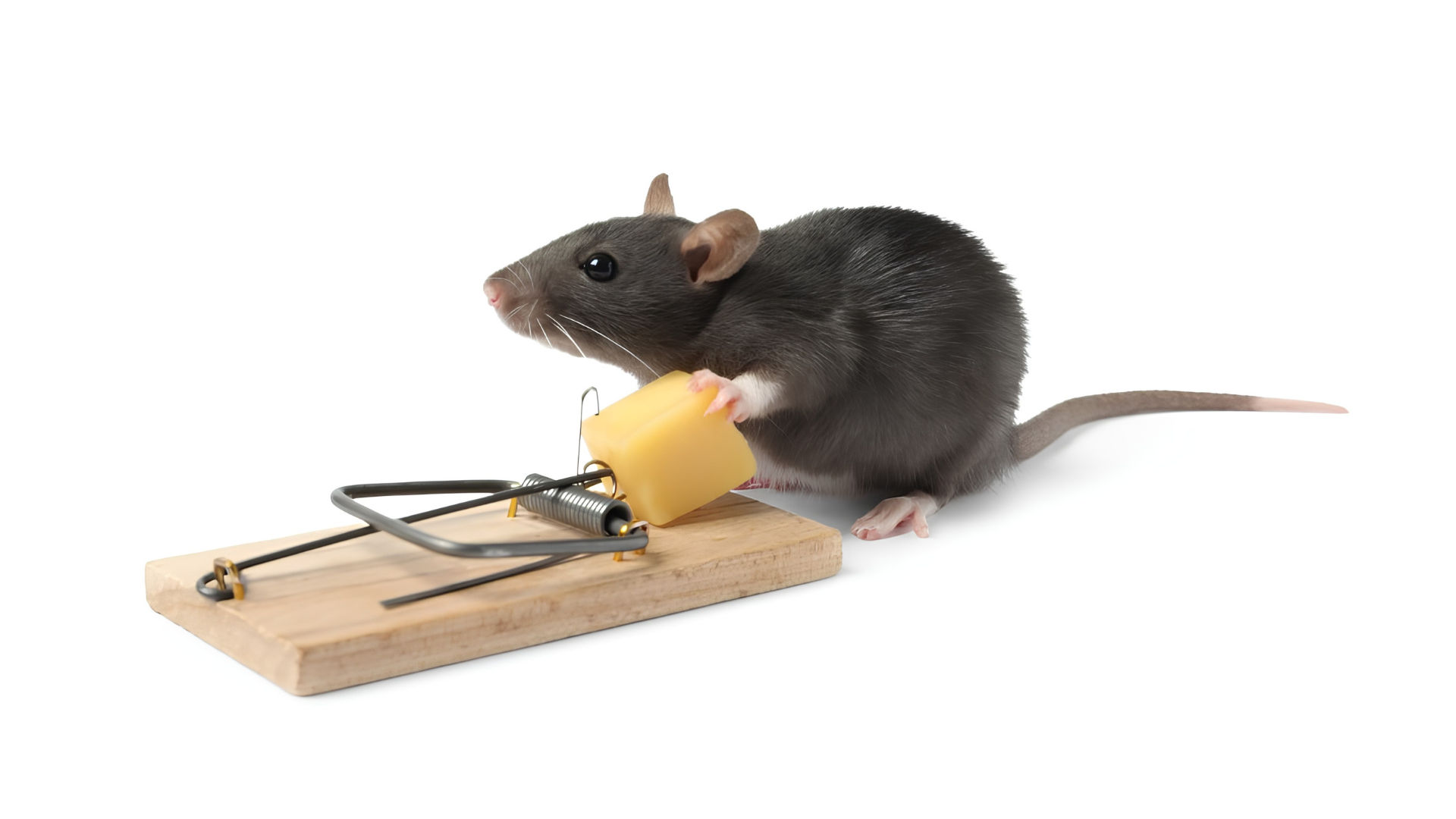
So, what if we built a better mouse trap? But since we are talking about delighting customers, not killing them with a lump of cheese… what if we were able to build a mouse spa?!
Ask any marketer looking to dial up consumer value, if they want and could sustain a better benefits program and the answer is usually some version of the same thing - “we’d love that, but we’d never be able to pay for the thing if it was any good!”.
It’s a reasonable reaction, considering just how expensive discounts are to brands - the often misplaced proxy for increasing the customer value exchange - and the limited list of proven alternatives. In effect, in a world where marketing budgets are under more scrutiny than ever, 59% of CMOs in 2025 reported having insufficient budget to execute their plans, according to Gartner.
To even contemplate year-round discounting carries well-understood risks - eroding margins, diluting brand equity, and making shoppers loyal to discounts instead the products and services designed to woo them in the first place! So, perhaps the caution around offering consumer benefits is also a rational response to having watched generic discounting go so very wrong.
Many brands have successfully built ancillary customer benefits, but these almost universally exist as a quid pro quo for paid membership or spend-related tier qualification – i.e. not increasing the value exchange universally for all, just the lucky few who are essentially buying the benefits.
So, what if we built a better mouse trap? But since we are talking about delighting customers, not killing them with a lump of cheese… what if we were able to build a mouse spa?!

Let’s park ‘affordability’ for a moment and consider what this idealistic ‘mouse spa’ might provide for customers.
We’re all customers, so it’s not a very difficult question to answer. What would we all really appreciate as ‘added value’ from the brands we choose? How about “easy to access, exciting benefits that connect with my passions and needs”? I also think that most marketers reading this would want to add “benefits that do a decent job of representing the brand, so the whole thing comes across as authentic and differentiated”. After all, if you’re being idealistic, you may as well shoot for the moon.
We’re all customers, so it’s not a very difficult question to answer. What would we all really appreciate as ‘added value’ from the brands we choose? How about “easy to access, exciting benefits that connect with my passions and needs”? I also think that most marketers reading this would want to add “benefits that do a decent job of representing the brand, so the whole thing comes across as authentic and differentiated”. After all, if you’re being idealistic, you may as well shoot for the moon.
Now let’s break this wish list down into parts, to explore the possible friction within each customer expectation.
‘Easy to access’ requires a great UX and suggests an open buffet of benefits for everyone - which raises the first eyebrow from the finance department. On the UX part, it depends if benefits are sitting within a legacy ecosystem or a newer one, built for today’s consumer. But in 2026, clever APIs and engaging gamification can polish up even the dustiest of platforms.
‘Exciting benefits’ that ‘connect with passions and needs’ instantly raises the finance team’s collective second eyebrow, since ‘exciting’ often means ‘valuable’… and value generally ain’t free. The second part relating to personalised relevance is arguably the holy grail of successful engagement and consumer loyalty - people stick around when they feel a stronger connection to what makes them tick. But how can one program satisfy all people? My conviction is that if you try to be everything to all people, then you are nothing to everyone.
This brings us nicely to part three: an approach that is both ‘authentic to the brand’ and ‘differentiated from others’. Remember, you already have an authentic and differentiated brand that you’ve spent a lot of time, money and market research creating. So, it’s the brand that remains your north star when building a benefits strategy, and it must simply be meaningful for the customers your brand exists to serve. If you’ve done a decent job with your brand, then you’re in fact serving a shared mindset and purpose rather than hyper-niche myriad personal quirks. Phew! You don’t need to boil the ocean to satisfy disparate consumer interests, you just need to authentically consider what’s their collective cup of tea. Be faithful to your brand and you’ll titillate your tribe.Without insulting you with a marketing lecture or needing to pay royalties to the Harvard Business Review or Seth Godin, the continued growth of the Experience Economy (basically ‘doing more stuff that makes me happy’) and the age-old heuristic of ‘people like me, do things like this’, both prompt every marketer to aspire to multiply positive and relevant brand experiences that extend beyond the moment of consumption.
‘Exciting benefits’ that ‘connect with passions and needs’ instantly raises the finance team’s collective second eyebrow, since ‘exciting’ often means ‘valuable’… and value generally ain’t free. The second part relating to personalised relevance is arguably the holy grail of successful engagement and consumer loyalty - people stick around when they feel a stronger connection to what makes them tick. But how can one program satisfy all people? My conviction is that if you try to be everything to all people, then you are nothing to everyone.
This brings us nicely to part three: an approach that is both ‘authentic to the brand’ and ‘differentiated from others’. Remember, you already have an authentic and differentiated brand that you’ve spent a lot of time, money and market research creating. So, it’s the brand that remains your north star when building a benefits strategy, and it must simply be meaningful for the customers your brand exists to serve. If you’ve done a decent job with your brand, then you’re in fact serving a shared mindset and purpose rather than hyper-niche myriad personal quirks. Phew! You don’t need to boil the ocean to satisfy disparate consumer interests, you just need to authentically consider what’s their collective cup of tea. Be faithful to your brand and you’ll titillate your tribe.Without insulting you with a marketing lecture or needing to pay royalties to the Harvard Business Review or Seth Godin, the continued growth of the Experience Economy (basically ‘doing more stuff that makes me happy’) and the age-old heuristic of ‘people like me, do things like this’, both prompt every marketer to aspire to multiply positive and relevant brand experiences that extend beyond the moment of consumption.

Back to the elephant in the room: affordability. How can you possibly afford this lavish mouse spa that gives all your customers more value and joy?!
(It’s about time that I come clean! I’ve been a part of the TLC Worldwide team for 21 years, and we have a proven solution to satisfy your customers at scale, without bankrupting your business.)
Over 3 decades, TLC has helped some the most ambitious brands on the planet grow their customer value proposition without discounting and without upsetting the finance department (!). All thanks to a proprietary rewards ecosystem, engineered to uniquely deliver affordable value, at scale. Meaning our customers can reward their customers, more generously, more often, and in a more personalised way... that also remains faithful to their brand.
We call this empowerment 'the value/cost paradox’; the art of rewarding more, for less.
(It’s about time that I come clean! I’ve been a part of the TLC Worldwide team for 21 years, and we have a proven solution to satisfy your customers at scale, without bankrupting your business.)
Over 3 decades, TLC has helped some the most ambitious brands on the planet grow their customer value proposition without discounting and without upsetting the finance department (!). All thanks to a proprietary rewards ecosystem, engineered to uniquely deliver affordable value, at scale. Meaning our customers can reward their customers, more generously, more often, and in a more personalised way... that also remains faithful to their brand.
We call this empowerment 'the value/cost paradox’; the art of rewarding more, for less.

At the beating heart of this rewards ecosystem, spins an economic flywheel that delivers a win-win-win for brands, their customers and the thousands of partner businesses that supply the rewards for a fraction of the cost.
Imagine being able to offer all your customers travel experiences, food & beverage perks, fun activities with their kids, live events and home entertainment, personal wellness or pamper treats… the options are virtually limitless – if your customers want it, we can deliver it on your behalf, at a price you can afford.
Back to the marketing truths…
We all know that customers remember ‘how you made them feel’, that the path to proper loyalty is through ‘emotional engagement’, not through discounting or serving the lucky few, and finally, that it ‘costs over 5 times more’ to acquire new customers than to retain them.
We can enable marketers to reframe their thinking. With growing pressure to connect with consumers, enhance reputation, control budgets, drive down CAC, and maximise CLV, the question no longer needs to be “how can we afford to increase customer value?” but more “how can we afford not to increase it?!”.
But hang on a minute - discounts are proven to work! And as consumers ourselves, we all love a discount. But you’re not just consumers, you are also savvy marketers, and you cannot afford to kill your brand by falling into the Discount Trap!
Imagine being able to offer all your customers travel experiences, food & beverage perks, fun activities with their kids, live events and home entertainment, personal wellness or pamper treats… the options are virtually limitless – if your customers want it, we can deliver it on your behalf, at a price you can afford.
Back to the marketing truths…
We all know that customers remember ‘how you made them feel’, that the path to proper loyalty is through ‘emotional engagement’, not through discounting or serving the lucky few, and finally, that it ‘costs over 5 times more’ to acquire new customers than to retain them.
We can enable marketers to reframe their thinking. With growing pressure to connect with consumers, enhance reputation, control budgets, drive down CAC, and maximise CLV, the question no longer needs to be “how can we afford to increase customer value?” but more “how can we afford not to increase it?!”.
But hang on a minute - discounts are proven to work! And as consumers ourselves, we all love a discount. But you’re not just consumers, you are also savvy marketers, and you cannot afford to kill your brand by falling into the Discount Trap!
The Discount Trap - what discounts are really costing you.
Discounts may feel like a safe, controllable lever. Simple. Fast. Measurable. But crocodile-infested waters also look rather safe to wildebeests having a slurp...

As many brands have found out, the long-term economics of discount dependency tell a scary story, with unintentional - crocodile-deadly - outcomes emerging, that are harder to measure in the immediate term and don’t sit neatly in an Excel spreadsheet, like emotional engagement and brand equity.
When brands repeatedly reach for price promotions or cash offers as their primary engagement tool, they train their customers to wait or go elsewhere if there is no other reason to stick around. Over time, this conditions purchasing behaviour in a way that is difficult to reverse and the brand pays for it twice - once in the promotional cost itself, and again in the loss of customers.
These customers are not loyal. They don’t have any real affinity with the brand, so there is no particular reason to stay if a competitor offers a better deal. They are simply opportunists the brand has trained to fall out of love with it.
As Ogilvy has noted, discounts train customers to expect something for nothing, diluting your ability to command premium prices. There is also a less tangible but equally damaging effect on brand perception. Findings published in Advances in Consumer Research found that while discounts and cash offers can drive short-term purchase intent, consumers exposed to this often perceive the brand as lower quality - a direct and measurable hit to brand equity that takes time and investment to repair.
The race to the bottom, in other words, has a massive hidden cost - death of your brand!
When brands repeatedly reach for price promotions or cash offers as their primary engagement tool, they train their customers to wait or go elsewhere if there is no other reason to stick around. Over time, this conditions purchasing behaviour in a way that is difficult to reverse and the brand pays for it twice - once in the promotional cost itself, and again in the loss of customers.
These customers are not loyal. They don’t have any real affinity with the brand, so there is no particular reason to stay if a competitor offers a better deal. They are simply opportunists the brand has trained to fall out of love with it.
As Ogilvy has noted, discounts train customers to expect something for nothing, diluting your ability to command premium prices. There is also a less tangible but equally damaging effect on brand perception. Findings published in Advances in Consumer Research found that while discounts and cash offers can drive short-term purchase intent, consumers exposed to this often perceive the brand as lower quality - a direct and measurable hit to brand equity that takes time and investment to repair.
The race to the bottom, in other words, has a massive hidden cost - death of your brand!

How big is your mouth?
As marketers offering discounts-a-go-go, you are effectively talking out of both sides of it - on the one side, you are saying that your product or service is better than the competition because of superior X, Y or Z that costs you more money or leverages your exclusive IP to deliver - and on the other side, you are saying that you can discount it very often.
This suggests that you are lying about the product’s value in the first place, or you no longer believe in the power of your brand yourself.
Value and cost are not the same thing.
All customers - that's you and me - seek the right solution for their needs, and therefore the correct value that they can afford; not ‘cheap’ for cheap’s sake.
This is an age-old fact, so I appreciate that I’m not stating anything new here. It’s why thousands of marketing leaders - unless you work for a discount brand that trades admittedly inferior products and services for lower prices - have made the shift away from margin-slashing price promotions or cash offers towards value-add strategies to engage customers.
Thanks to TLC’s rewards ecosystem, marketers can now play the 3D chess version of added-value - not just the monetary value of the rewards offered, but the exponential value of the consumer emotions that experiences can deliver and the memories they create.
This suggests that you are lying about the product’s value in the first place, or you no longer believe in the power of your brand yourself.
Value and cost are not the same thing.
All customers - that's you and me - seek the right solution for their needs, and therefore the correct value that they can afford; not ‘cheap’ for cheap’s sake.
This is an age-old fact, so I appreciate that I’m not stating anything new here. It’s why thousands of marketing leaders - unless you work for a discount brand that trades admittedly inferior products and services for lower prices - have made the shift away from margin-slashing price promotions or cash offers towards value-add strategies to engage customers.
Thanks to TLC’s rewards ecosystem, marketers can now play the 3D chess version of added-value - not just the monetary value of the rewards offered, but the exponential value of the consumer emotions that experiences can deliver and the memories they create.
- How much is happiness worth?
- How valuable is time with your family and friends?
- What is that feeling when you first jump into the pool on holiday?
- Would you remember that feeling for longer than a discount?

Why ‘always-on’ outperforms ‘occasional’.
Beyond the value/cost debate, the other dimension to earning greater customer engagement is the frequency of the value on offer.
We all know that emotional resonance with a brand is not built in a single moment. It is cultivated through consistent, repeated, positive experiences that accumulate over time into something that genuinely feels more appreciated and valuable. That can be online or an instore moment, or in the packaging... So, to the same logic a brand that shows up with relevant, valuable rewards or perks week after week - or at whatever cadence matches the potential engagement rhythm - has a very fair right to expect greater customer affinity and the economic fruits that grow with it.
As an example, giving your entire customer base access to a £€$1 weekly coffee from their local coffee shop for an entire year, for the marketing cost of one single Frappuccino, could make your brand the Al Pacino of your sector; notorious, enduring, much loved, and award-winning!
We all know that emotional resonance with a brand is not built in a single moment. It is cultivated through consistent, repeated, positive experiences that accumulate over time into something that genuinely feels more appreciated and valuable. That can be online or an instore moment, or in the packaging... So, to the same logic a brand that shows up with relevant, valuable rewards or perks week after week - or at whatever cadence matches the potential engagement rhythm - has a very fair right to expect greater customer affinity and the economic fruits that grow with it.
As an example, giving your entire customer base access to a £€$1 weekly coffee from their local coffee shop for an entire year, for the marketing cost of one single Frappuccino, could make your brand the Al Pacino of your sector; notorious, enduring, much loved, and award-winning!

And data supports this emphatically, with research indicating that even a 5% improvement in customer retention can boost profits by between 25% and 95%, and engaged loyal customers result in CLV increases of up to 25%.
But you know all of these data points and trends... the fundamental topic of this whole piece is that it’s only genuinely interesting to you, IF you can afford to do this properly in the first place.
But you know all of these data points and trends... the fundamental topic of this whole piece is that it’s only genuinely interesting to you, IF you can afford to do this properly in the first place.
Did someone say ‘award-winning’?
Only a few weeks ago, VodafoneThree and TLC won major recognition at the International Loyalty Awards in Atlanta, with our teams taking home the prestigious International Loyalty Program of the Year accolade for Europe.
Recognised for its innovative approach to customer engagement, emotional loyalty, and driving habitual customer behaviour with local relevance, this scaled program gives all customers access every week to a barista-made coffee for only £1! Moving from transactional mechanics, the initiative was purposefully designed to deliver consistent, feel-good value through an everyday ritual. Literally fuelling customers lives.
Recognised for its innovative approach to customer engagement, emotional loyalty, and driving habitual customer behaviour with local relevance, this scaled program gives all customers access every week to a barista-made coffee for only £1! Moving from transactional mechanics, the initiative was purposefully designed to deliver consistent, feel-good value through an everyday ritual. Literally fuelling customers lives.

Elsewhere, in the US telecoms space, TLC collaborated with network giant AT&T to deliver best-in-market dining perks to many millions of customers. The success of this program didn’t just depend on our ability to deliver best in market food and beverage perks at the nation’s favourite local and national eateries, it worked because we did the customer mapping and customer research to ensure the right offer was served up in the most user-friendly way.

Sticking with the telecoms sector for a moment longer, Singapore’s largest mobile network operator Singtel, achieved a 30% lift in app engagement thanks to the introduction of TLC’s always-on dining rewards. Recognising Singaporeans’ equal love of food and travel, we further enhanced engagement by offering exclusive hotel perks, with 71% of customers redeeming multiple times within the first few months.

Beyond telecoms, we have solved the same challenge of increasing relevant customer value across financial services, retail, insurance and utilities, turning transactions into more meaningful engagement.

Ride hailing app Move It operates in one of Southeast Asia’s most competitive markets, the Philippines. They approached us because their customers were active but flipped to competitors within seconds when prices were cheaper, making it impossible to build longer-term loyalty. To tackle this, we launched a gamified rewards program that created opportunities to win exciting destinations with every trip. The strategy generated an 80% conversion rate, more than 2 million plays, and encouraged customers to stay more loyal to the app.
In FS, we’ve engaged the hearts, minds and stomachs of GenZ by offering university students who opened an account with Nationwide Bank dining perks valued at £120. And the data shows it worked, with Yahoo Finance reporting 80,000 new accounts opened, raising the bank from 5th to 2nd place in the national ranking.
In FS, we’ve engaged the hearts, minds and stomachs of GenZ by offering university students who opened an account with Nationwide Bank dining perks valued at £120. And the data shows it worked, with Yahoo Finance reporting 80,000 new accounts opened, raising the bank from 5th to 2nd place in the national ranking.
Are you ready for more joy, more often?
Now, brands like yours can afford to offer all customers more value, more joy, more often. You can now have what you thought you couldn’t afford, thanks to TLC.
Always-on experience rewards are not a luxury reserved for brands with unlimited marketing budgets. They are a commercially smarter alternative to undifferentiated strategies that erode brand equity and CLV across every category.
At TLC Worldwide, we’ve spent over 30 years helping the world’s most ambitious marketers transform customer acquisition, engagement and loyalty - on brand, at scale, and within budget. If you’d like to explore what a smarter value-add strategy could look like for your brand, we’d love to start that conversation.
Always-on experience rewards are not a luxury reserved for brands with unlimited marketing budgets. They are a commercially smarter alternative to undifferentiated strategies that erode brand equity and CLV across every category.
At TLC Worldwide, we’ve spent over 30 years helping the world’s most ambitious marketers transform customer acquisition, engagement and loyalty - on brand, at scale, and within budget. If you’d like to explore what a smarter value-add strategy could look like for your brand, we’d love to start that conversation.
Share
Read more

Article
Chris Esposito Joins TLC Worldwide as chief technology officer
TLC Worldwide appoints Chris Esposito as CTO to lead its global technology, product and data teams and advance COSMOS.

Article
What if value didn't have to mean cheaper?
Discover how value-add promotions can drive sales, strengthen brand equity and give shoppers reasons to choose beyond price.

Article
How Telcos Can Stand Out in a Sea of Sameness
In a commoditised telecoms market, discover how experience-led, emotional engagement helps telcos stand out and grow.

Video
6 Lessons Financial Services Marketers Need to Hear This Year
How financial services marketing can pivot from acquisition to enduring engagement