Most brands say they understand women – these three actually prove it
March 03, 2026
The power of starting with the real question
That’s the big question at the center of all three campaigns. The brands who answered it honestly and built something raw and real are the ones we’re still talking about today.
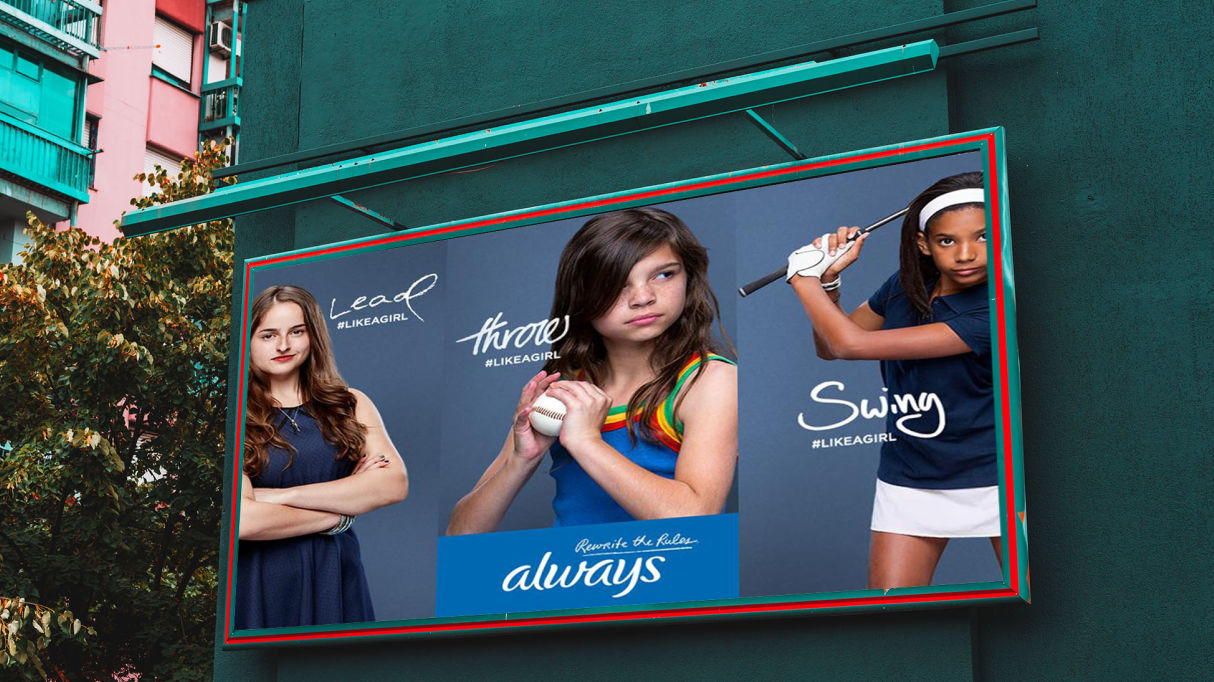
Always’ #LikeAGirl
#LikeAGirl tackled the damaging cultural truth that, by the time girls reach puberty, the phrase “like a girl” is widely used as an insult – signaling weakness, incompetence, or someone overly emotional. The campaign brought this language bias to life with a social experiment.
Teens and adults were asked to run, throw, and fight “like a girl” – and both the women and men showed up with exaggerated, self-deprecating impressions that reflected their social conditioning. Then the brand team asked younger girls to do the same. They ran fast, they threw hard, and they fought like they meant it. Because for them, doing something “like a girl” just meant doing it as well as they possibly could; no negative connotation had infiltrated their consciousness yet. The contrast and ramifications were so powerful that the campaign’s message became, “Why can’t ‘run like a girl’ also mean ‘win the race’?”
That led to 90 million video views in the first few months, 4.4 billion media impressions, and 96% of viewers saying the campaign changed their whole perception of the phrase “like a girl”. Purchase intent among Always’ target audience spiked – and more than a decade later, “like a girl” is still a phrase people reclaim rather than weaponize.
The campaign ended up inspiring a cultural shift. And that’s how you win a decade, not just a sales cycle.
The takeaway for brands:
When your product connects to how someone sees themself, you have an opportunity to meaningfully shape how that identity is understood by your consumer and the people surrounding them. Asking that big question might just end up being the most powerful hook in your toolkit.

Dove’s ‘Real Beauty’
From billboards featuring “real women” to viral films like Real Beauty Sketches, they chose relatability over perfection. Dove’s content went viral because it hit on something true: women saw themselves on screen and embraced real beauty over unrealistic societal ideals.
The campaign was a huge commercial success: Dove’s sales grew from $2.5 billion to over $4 billion in the decade following its launch. And Real Beauty is still running over two decades later – an almost unheard-of lifespan in modern marketing.
The takeaway for brands:
When you reflect a truth your audience feels but rarely sees being acknowledged, you earn trust and brand equity that compounds over time.

Nike’s Dream Crazier
The film generated tens of millions of views on social platforms within days of launch, and promptly sparked a global conversation that went way beyond sports.
The takeaway for brands :
Focusing on women’s empowerment doesn’t have to be gentle or soft-focus. As long as it feels authentic to the brand and grounded in a real understanding of the audience, it can be as bold, direct, and culturally specific as you want.
.png?tr=dpr-auto,q-90,fo-auto,h-682,w-1214)
Why These Campaigns Are Still The Benchmark
What This Means For Brand Marketers Right Now
When you build on the right insights and act on them with courage and creativity, you create moments that stick.
These campaigns show that it’s possible to be brave and thoughtful at the same time – to push boundaries, challenge the status quo, and use your voice and platform to move beyond a single product or campaign.
International Women's Day gets brands talking, but you don’t need a calendar date to focus on who you’re trying to reach. Stop talking, start listening, and integrate those findings with your brand and loyalty strategies, and you’ll create bold campaigns that leave a cultural mark of their own.
In other words: “Do it like a girl”.
Ready to get in touch?
Discover how we can make your sales promotions, acquisition, engagement and loyalty programs work harder.
Let's TalkShare
Read more

Download
How to Build Promotions That Actually Work
Discover the three promotional pillars helping brands overcome budget pressure and private-label growth - without relying on discounts.
.png?updatedAt=1770051372013&tr=fo-auto,ar-330-300,c-at_max:dpr-auto,q-90,fo-auto,ar-330-300,c-at_max,w-540)
Article
How Emotions Drive FMCG Purchases: Beyond Discounting
Discover how emotional triggers influence FMCG buying decisions and why experience-based rewards outperform discounting for brand loyalty.

Article
The Emotional Drivers of Choice
Emotion drives 90% of decisions. Discover how FMCG brands tap into feelings, not just price, to win hearts, baskets and loyalty.
%20(12).png?tr=fo-auto,ar-330-300,c-at_max:dpr-auto,q-90,fo-auto,ar-330-300,c-at_max,w-540)
Article
How World Cup Will Influence Your Brand in 2026
The World Cup sees billions tune in across the globe, creating opportunities for brands to engage, inspire, and deliver measurable impact.